
The Lubricant Mistake Almost Everyone Makes
Walk into most garages and you'll find a can of WD-40 sitting on the shelf. When the garage door starts squeaking, it's the first thing people reach for — it's already there, it's cheap, and spraying it on the noisy spot seems to quiet things down right away. That's exactly the problem. WD-40 is a solvent and water-displacer, not a lubricant. It breaks down old grease and grime, which is why the squeak disappears for a day or two, but it evaporates fast and leaves metal parts drier than before. In a climate with humid summers and salty, freeze-thaw winters, that dried-out metal is exactly what starts to pit and rust. What felt like a fix often speeds up the wear.
Tools You'll Need
- Silicone-based garage door lubricant (sold specifically for garage doors)
- Lithium grease (for a few specific parts, noted below)
- Clean, lint-free rags
- A soft brush or old toothbrush for cleaning hinges and tracks
- Safety glasses
- A sturdy step ladder
Skip the WD-40, motor oil, cooking oil, or heavy automotive grease. Thick grease attracts dust and road salt residue tracked in from the driveway, turning into a gritty paste that grinds down moving parts instead of protecting them.
Step-by-Step: How to Lubricate Your Garage Door
- Close the door and disconnect the opener. Pull the manual release cord so you can move parts by hand safely, and unplug the opener unit itself.
- Wipe down the tracks first. Use a dry rag to remove dust, cobwebs, and any crusty salt residue from winter driveway runoff. Never lubricate the tracks themselves — they should stay clean and dry so the rollers can glide, not slide on oil.
- Lubricate the hinges. Spray a light coat of silicone lubricant on each hinge where the door panels pivot. Work the door up and down a few inches by hand to let it settle into the joint.
- Lubricate the rollers. If your rollers have exposed bearings (not sealed), apply a small amount of lubricant to the stem where it meets the hinge, not the wheel surface itself.
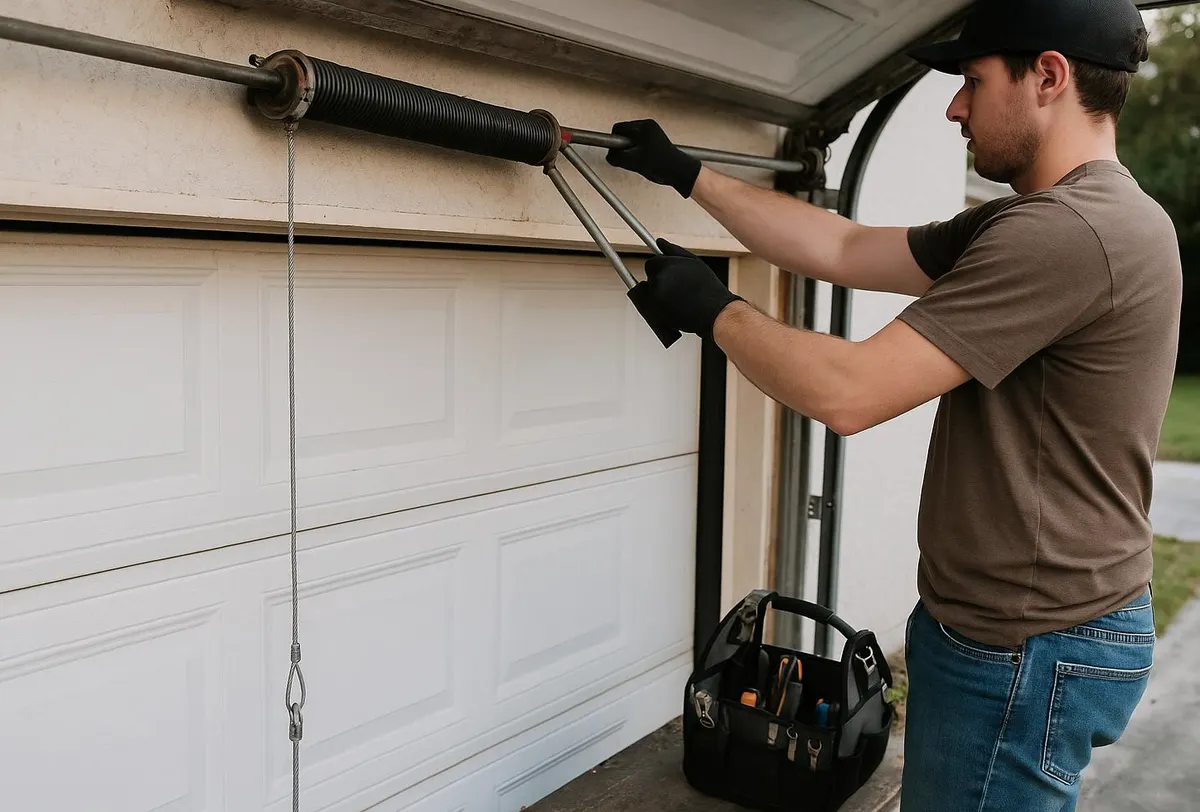
- Coat the springs lightly. A thin film of silicone spray on the torsion spring coils helps prevent rust, especially important given how quickly bare metal corrodes through a Hudson Valley winter of road salt and freeze-thaw cycles. Spray only; never touch, adjust, or put tension on the spring.
- Lubricate the opener's chain or screw drive. A small amount of lithium grease on a screw-drive opener, or silicone spray on a chain-drive, keeps it running smoothly without flinging grease onto the garage floor.
- Wipe off excess. Any lubricant left pooling on a surface just collects dust and grit. A clean, dry pass with a rag after application makes a noticeable difference.
- Reconnect the opener and test. Run the door through a full open-close cycle and listen. Squeaks at the hinges should be gone; grinding or scraping noises mean something beyond lubrication needs attention.
What's Safe for Homeowners vs. What Isn't
Cleaning tracks, lubricating hinges and rollers, and applying a light coat to spring coils are all reasonable homeowner tasks with basic tools and about twenty minutes. What's not a DIY job: adjusting spring tension, replacing a roller that's cracked or off-track, or working on the cables and pulleys. Torsion springs are under heavy tension and have caused serious injuries when handled without the right tools and training. If you notice a roller that looks worn down, a track that's bent, or a spring with visible gaps between coils, that's a sign of a bigger issue hiding behind the noise.
When to Call Harriman Garage Door
If you've lubricated everything correctly and the door still groans, jerks, or hesitates partway through its cycle, the issue is likely mechanical rather than a lack of lubrication — worn rollers, a stretched cable, or a spring nearing the end of its life. This is especially common with the original hardware still found on a lot of older homes throughout Harriman, Monroe, and Woodbury. Our team offers full Garage Door Maintenance visits to inspect springs, cables, and rollers beyond what a homeowner can safely check, and if a spring does need replacing, our Spring Replacement service handles it safely with the right tension tools.
If your garage door in Harriman, NY or anywhere nearby is squeaking, sticking, or just overdue for a real inspection, give Harriman Garage Door a call — we'll make sure it's ready for whatever the Hudson Valley winter brings.