
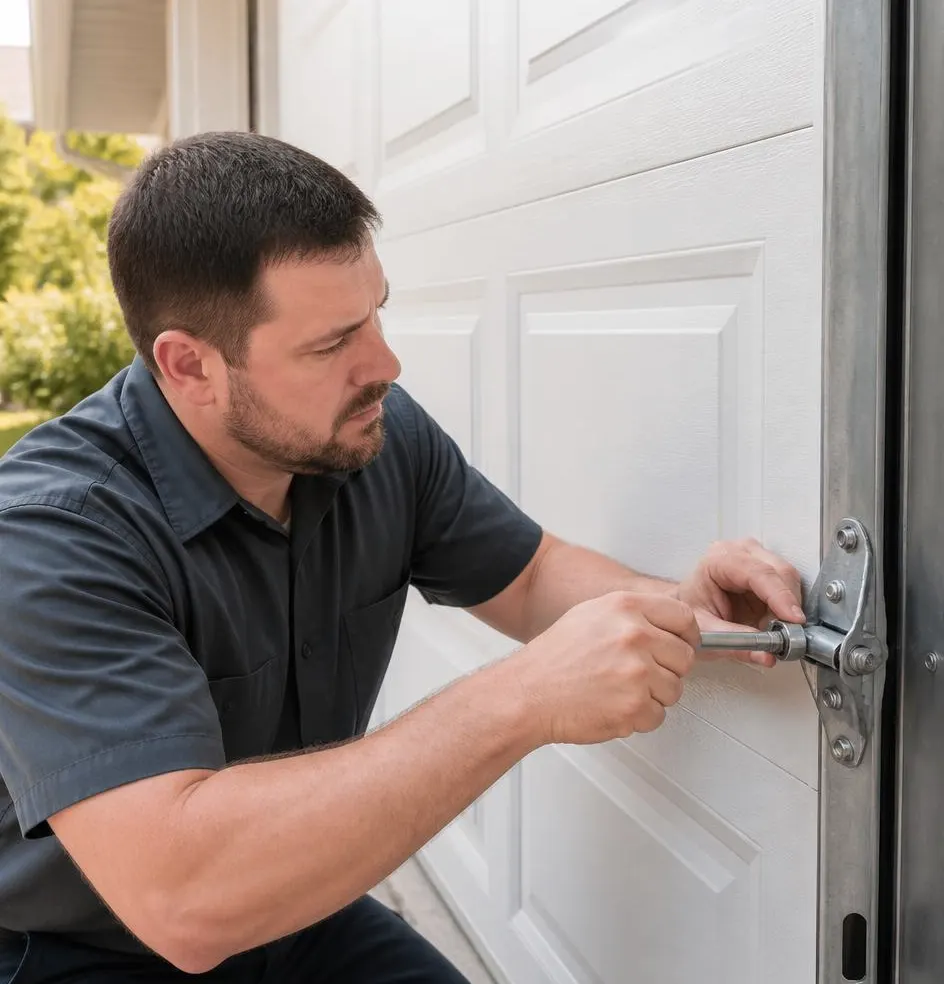
What Another Winter of Neglect Actually Costs You
Skip garage door prep one more season and the bill usually doesn't show up as a single line item — it shows up as a 6 a.m. morning when the door won't budge because ice has sealed it to the slab, or as a torsion spring that snaps in the cold and takes the opener's drive gear with it. Rock salt spray eats through unprotected track hardware over a winter or two. Cracked weatherstripping lets melting snow run straight into the garage, where it refreezes overnight and turns the floor into a skating rink. None of this is dramatic until it is, and by then you're paying for an emergency call instead of twenty minutes of maintenance.
Why This Stretch of New York Is Hard on Garage Doors
The Hudson Valley doesn't just get cold — it gets cycled. Temperatures swing above and below freezing repeatedly through the winter, and every one of those swings expands and contracts metal, wood, and rubber seals a little more. Add nor'easters that dump heavy, wet snow, road salt tracked in on tires and boots, and the area's older housing stock — plenty of homes here still have original doors, springs, and openers that predate modern weatherproofing — and you've got a setup where small issues compound fast. A door that would last fifteen years in a mild climate can show serious wear in half that time here if it's never been adjusted or lubricated.
The Pre-Winter Checklist
1. Inspect and Replace Weatherstripping
Check the rubber seal along the bottom of the door and the vinyl strips along the sides and top. If it's cracked, flattened, or pulling away from the track, cold air, snowmelt, and mice will all find their way in. This is one of the cheapest fixes on this list and one of the most commonly ignored.
2. Lubricate Moving Parts — With the Right Lubricant
Hinges, rollers, and the torsion spring itself need a silicone-based or lithium-based garage door lubricant before temperatures drop. Avoid WD-40 as a long-term lubricant — it's a solvent that can actually strip existing grease and leave moving parts drier once it evaporates. A light coat on hinges and rollers keeps the door from grinding or sticking when metal contracts in the cold.
3. Test the Balance
Disconnect the opener (pull the emergency release cord) and lift the door halfway by hand. It should stay in place on its own. If it drifts up or crashes down, the torsion spring is losing tension — and cold weather is exactly when a weakened spring is most likely to fail outright, since cold metal is more brittle and under more strain from a heavier door.
4. Clear and Inspect the Tracks
Look for rust forming where road salt spray or de-icing residue has settled, especially on doors that face the street or sit low to a salted driveway. Wipe tracks clean and check that they're still aligned — a track that's slightly bent won't show up as a problem until ice and extra moisture add friction the opener wasn't designed to fight.
5. Check the Auto-Reverse Safety Sensors
Dirt, condensation, or a slightly knocked-out-of-alignment sensor can cause the door to refuse to close or reverse unexpectedly — more common in winter when sensors fog up from temperature differences between the garage and outside air. Wipe the lenses and confirm the indicator lights are solid, not blinking.
6. Consider Insulation If You Haven't Already
If the garage shares a wall with living space, or you park a vehicle in there overnight during nor'easters, an insulated door (or an insulation retrofit kit for an existing door) keeps the space warmer and reduces the temperature swing that stresses hardware. This is a bigger investment than the steps above, and it's worth weighing against how much time you actually spend in or near the garage — it matters more for an attached garage with living space above it than a detached one.
7. Check Opener Battery Backup and Force Settings
Power outages are common during nor'easters, and a battery backup on the opener means you're not stuck manually hoisting a heavy door in a storm. While you're at it, confirm the opener's force setting isn't fighting a door that's gotten harder to move due to cold stiffness — struggling here is often the first sign of a balance or spring issue, not an opener problem.
DIY vs. Calling for Help
Lubrication, weatherstripping, and visual inspection are reasonable DIY tasks for most homeowners. Spring tension and track alignment are not — torsion springs are under significant load, and adjusting or replacing them without the right tools is a genuine injury risk. If the balance test fails, if you hear grinding or popping from the spring area, or if the door has visibly started sagging on one side, that's a job for a technician, not a weekend project.
When to Call Harriman Garage Door
If your door is slow to respond, unbalanced, or making new noises as the weather turns, that's the window to get it looked at before a cold snap turns a minor issue into a stuck or broken door. Harriman Garage Door handles garage door maintenance tune-ups — lubrication, hardware checks, balance adjustments — as well as spring replacement when a torsion spring is showing fatigue, rust, or gaps in the coils. Catching a weak spring in October beats replacing a snapped one in a January freeze with the door stuck halfway open.
If you're in Harriman, Monroe, Woodbury, Tuxedo, Southfields, Arden, Central Valley, or Highland Mills and want your garage door checked before the first real freeze hits, call Harriman Garage Door today to schedule a winter tune-up.